When Someone Else’s Feelings Become Your Responsibility: Insights from a Trauma Therapist in Alpharetta
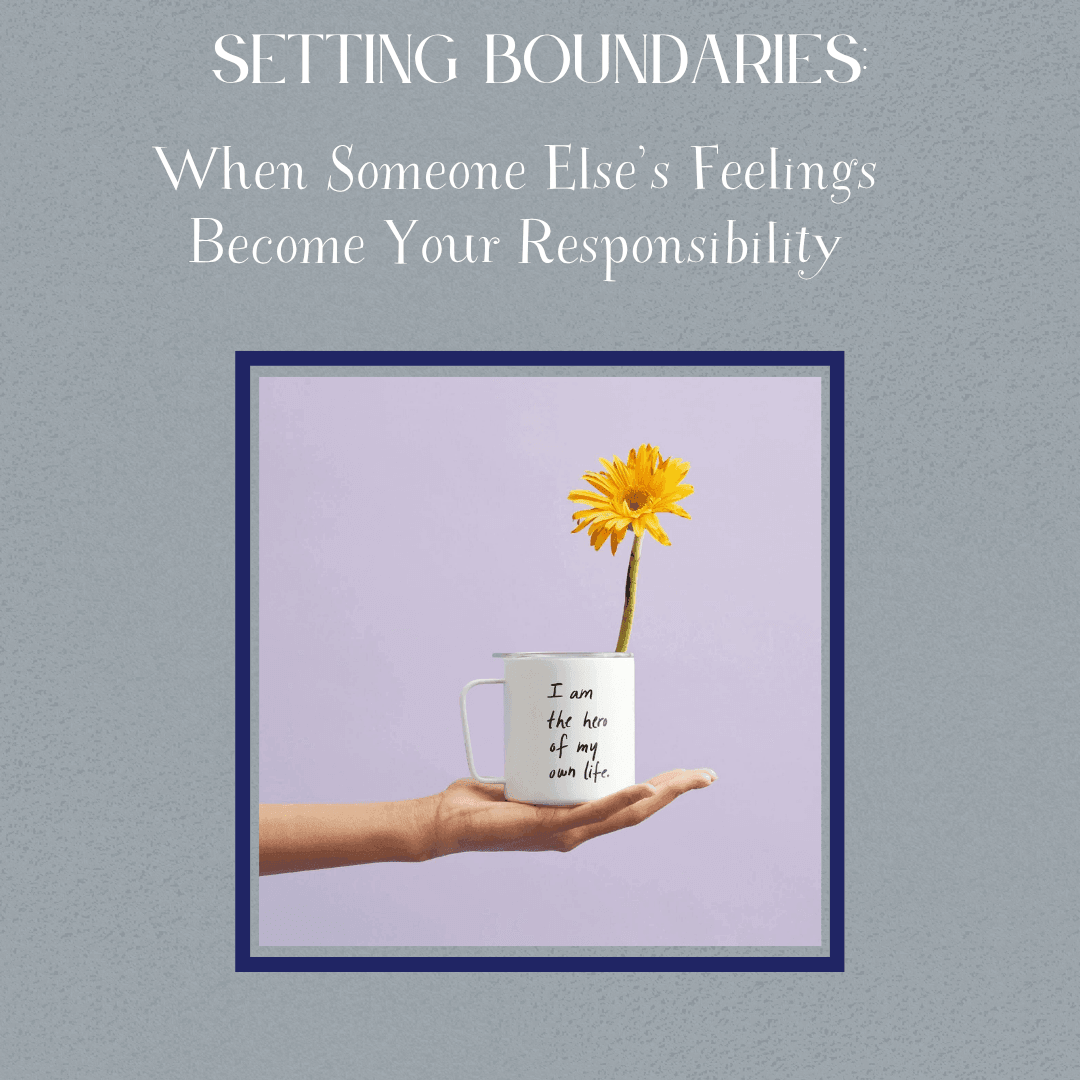
Have you ever changed your plans because you knew someone would be upset if you didn’t?
Maybe you stayed longer than you wanted to. Sat beside someone because you worried they would feel lonely. Explained a perfectly reasonable decision because you knew they wouldn’t understand it. Or found yourself carefully considering how someone might react before deciding what you wanted to do.
At first, these choices may simply feel like kindness.
After all, caring about other people is part of having healthy relationships. We make compromises. We consider each other’s feelings. Sometimes we do things we wouldn’t ordinarily choose because they matter to someone we love.
But somewhere along the way, caring about another person’s feelings can quietly become feeling responsible for them.
And those are two very different things.
As a trauma therapist in Alpharetta, I often help people explore the complicated space between compassion for others and responsibility for themselves. For people who have spent years keeping the peace, anticipating other people’s reactions, or trying to prevent conflict, boundaries can initially feel unkind.
But boundaries don’t mean you’ve stopped caring.
Sometimes they are what allow you to care without losing yourself.
When Kindness Quietly Becomes Obligation
These patterns don’t usually begin with someone announcing, “From now on, you are responsible for keeping me happy.”
They develop slowly.
Perhaps someone is disappointed when you already have plans. You explain yourself.
They’re hurt when you don’t spend as much time with them as they expected. You rearrange your schedule.
They question a decision you made. You defend it.
They’re lonely, so you make sure they aren’t alone.
None of these choices is necessarily unhealthy by itself. The question is what happens inside you when you consider doing something different.
Do you think:
I’d really like to do this for them.
Or do you think:
I’d better do this because I don’t want to deal with how they’ll feel if I don’t?
That distinction matters.
One comes from generosity.
The other may come from fear, guilt, obligation, or an increasing sense that another person’s emotional well-being depends on you.
Caring About Someone Is Not the Same as Keeping Them Happy
Healthy relationships require us to care about how our behavior affects other people.
If I hurt someone, I want to know. If I make a mistake, I want to repair it. If someone I love is struggling, I hope I have enough compassion to notice.
But caring about someone’s feelings doesn’t mean preventing them from ever experiencing disappointment, loneliness, frustration, sadness, or disagreement.
Sometimes people we love will be disappointed by perfectly reasonable decisions.
You may choose to spend your birthday differently than they hoped.
You may go home early.
You may decline an invitation.
You may disagree with their advice.
You may decide that something they would do isn’t right for you.
Their disappointment is real. You can acknowledge it without assuming that you caused harm.
That distinction can be difficult, particularly for people whose past experiences taught them to closely monitor other people’s emotions.
Why Trauma Can Make This So Difficult
For some people, paying close attention to other people’s moods was once protective.
Perhaps anger in your childhood home meant something bad was about to happen. Maybe keeping a parent happy made the environment feel safer. Perhaps love or approval disappeared when you disappointed someone.
Over time, the nervous system can become extraordinarily good at noticing subtle shifts in other people.
A facial expression changes.
Someone becomes quieter.
A text sounds different.
A person seems disappointed.
And your body may respond before you have consciously decided that anything is wrong.
What did I do?
Are they upset with me?
How do I fix this?
This is one reason trauma therapy in Alpharetta may include more than simply teaching someone how to say “no.” Sometimes the deeper work involves learning that another person’s disappointment does not automatically signal danger—and that you don’t have to immediately repair every uncomfortable emotion you encounter.
You Don’t Have to Defend Every Decision
One subtle boundary is learning to stop overexplaining ordinary choices.
Suppose someone asks why you left an event early.
You could provide your entire history:
“I almost never leave early. I’ve been here every week for months. I was tired today, and I had something else I needed to do…”
But what are you trying to accomplish with all that information?
Sometimes we aren’t explaining.
We’re presenting evidence for our defense.
We’re trying to convince another person that our decision was acceptable.
A boundary might sound much simpler:
“I needed to leave early today.”
That doesn’t mean you are cold or dismissive. It simply means you recognize that some decisions belong to you.
The goal of a boundary isn’t to convince another person that your decision is reasonable.
The boundary is recognizing that their agreement isn’t required.
Privacy Can Be a Boundary Too
Boundaries aren’t only about saying no.
Sometimes they involve deciding who gets access to different parts of your life.
You may enjoy someone's company while realizing they aren’t the safest person to discuss certain subjects with.
You can laugh together, share a meal, talk about your week, and genuinely care about them while keeping more vulnerable parts of your life private.
Not everyone needs access to everything.
That isn’t dishonest.
It’s discernment.
You Can Be Kind Without Being Responsible
Perhaps the hardest boundary is the one nobody else can see.
It is the internal boundary that says:
I care that you’re disappointed, but I don’t have to change my decision.
I care that you’re lonely, but I cannot make myself responsible for making sure you are never alone.
I care that you disagree with me, but I don’t have to convince you that I’m right.
I care about this relationship, but caring about you doesn’t require abandoning myself.
For people who are naturally compassionate, this can feel uncomfortable at first.
You may feel guilty.
The other person may even be unhappy with the change.
But discomfort doesn’t necessarily mean the boundary is wrong.
Sometimes it simply means you’re doing something differently.
Boundaries Can Make Room for Genuine Kindness
There is a beautiful difference between sitting beside someone because you genuinely want to and sitting beside them because you believe you are responsible for making sure they aren’t alone.
From the outside, those actions may look identical.
Inside, they are completely different.
One is a gift freely given.
The other has become an obligation.
Healthy boundaries help us reclaim the freedom to give because we want to—not because we are afraid of what will happen if we don’t.
You can be thoughtful.
You can be generous.
You can notice the person sitting alone.
You can care deeply about how other people feel.
And you can still have boundaries.
Sometimes the most important boundary isn’t something we say to another person. It is the boundary we establish inside ourselves when we finally recognize:
Someone else being unhappy with my decision does not automatically mean I have done something wrong.
If you find yourself constantly monitoring other people’s emotions, overexplaining your choices, struggling with guilt when you say no, or feeling responsible for keeping everyone around you happy, therapy can help you understand where those patterns began and develop relationships that leave room for both compassion and autonomy.
I offer trauma therapy in Alpharetta for adults who want to understand these patterns and build healthier relationships with themselves and others. If this feels familiar, I invite you to schedule a free 15-minute consultation to see whether working together might be a good fit.

Kristy Brewer is an Alpharetta therapist who helps people find peace amid the chaos and offers in-person and online therapy across Georgia. Her specialties include trauma therapy, attachment therapy, anxiety therapy, depression therapy, and parents raising a traumatized child.
Request a free 15-minute phone consultation today by clicking here.